PIPELINE

Skip to results list
Availability
Price
to
The highest price is $44,750.00
Clear
15 items
Sort Featured
Column grid
Column grid

Filter

Availability
Price
to
The highest price is $44,750.00
Sort Featured

Pipeline Sandbags & Trench Support Solutions

Pipe Padding, Temporary Ballast, Trench Plugs & Right-of-Way Erosion Control

Pipeline sandbags perform several different jobs across a construction spread. Properly specified bags may provide temporary pipe support, trench padding, grade adjustment, wet-trench ballast, trench plugs, slope breakers, sediment control, geotextile hold-down and emergency washout protection.

The Sandbag Store® supplies empty sandbags, pre-filled palletized sandbags, permeable gravel bags, large bulk barriers and automated filling equipment for natural gas, hazardous-liquid, water, sewer, utility and industrial pipeline construction.

Pipeline work is specification-driven. The appropriate bag, fill material, finished weight and placement method depend on the pipeline operator, pipe coating, engineering drawings, environmental plans, trench conditions, required service life and whether the installation is temporary or intended to remain after backfill.

Pipeline Construction Insight: A sand-filled pipe-support bag, a permeable gravel bag and a 3,000-pound bulk bag are not interchangeable. Select the product according to its actual function, direct-contact requirements, hydraulic behavior, handling method and approved project specification.

Who Uses Pipeline Sandbags?

  • Mainline Pipeline Contractors: Pipe lowering, temporary support, grade adjustment, trench plugs and spread logistics.
  • Natural Gas Operators: Transmission, gathering, distribution and integrity-management construction.
  • Liquid Pipeline Contractors: Crude oil, refined product, carbon dioxide and other regulated pipeline systems.
  • Water & Sewer Contractors: Utility trenching, pipe bedding, temporary stabilization and site restoration.
  • Environmental & ROW Crews: Slope breakers, sediment barriers, wetlands, waterbody crossings and revegetation support.
  • Pipeline Maintenance Teams: Washout response, exposed-pipe stabilization and temporary erosion protection.
  • Material Yards & Mobile Fillers: Centralized production of consistent sand-filled or gravel-filled bags.
  • Government & Utility Buyers: Emergency inventory, long-life field materials and specification-driven procurement.

Pipeline Sandbag Selection Guide

Start with the job the bag must perform. Direct pipe support generally calls for a different fill and fabric than an erosion-control structure, wetland sediment barrier or large ROW berm.

Pipeline Requirement Recommended Product Why It Fits
Project-approved pipe support, padding and grade adjustment Economy Sandbags
Economy Pre-Filled Pallets
Economical sand-filled support where the operator accepts the fabric, fill, bag weight and placement detail.
Heavy-duty pipe support and repeated spread handling Cactus® Sandbags
Cactus® Pre-Filled Pallets
Thicker woven polypropylene construction and longer UV life than Economy bags for demanding field use.
Temporary trench plugs, slope breakers and sediment barriers Economy Sandbags
Cactus® Sandbags
Stackable standard bags can form project-approved temporary controls and can be filled locally or delivered pre-filled.
Long-duration ROW erosion, drainage and slope controls DuraBag® Sandbags
DuraBag® Pre-Filled Pallets
Five-year UV-rated polyethylene mesh supports permeable gravel-filled controls and long outdoor deployment.
Projects specifying nonwoven geotextile fabric Geotextile Sandbags
Geotextile Pre-Filled Pallets
Available in 4 oz. and 8 oz. nonwoven polypropylene with published tensile, puncture, burst and flow data.
Linear ballast, liner hold-down and ready-to-deploy surface weight Tube Sand - 60 lb Pre-Filled Bags Elongated triple-layer bags distribute weight along geofabrics, covers, equipment edges and temporary surface controls.
Large temporary berms, washout protection and material staging FIBC Bulk Bags
Big Hoss Sandbags®
Heavy-equipment-compatible bags provide up to approximately 3,000 pounds of mass per filled unit.
Long-life domestic or MIL-SPEC procurement Acrylic Sandbags
Acrylic Pre-Filled Pallets
USA-made, seven-year UV-rated options available empty or factory-filled on 3,000-pound pallets for qualifying military, federal and critical-infrastructure procurement.
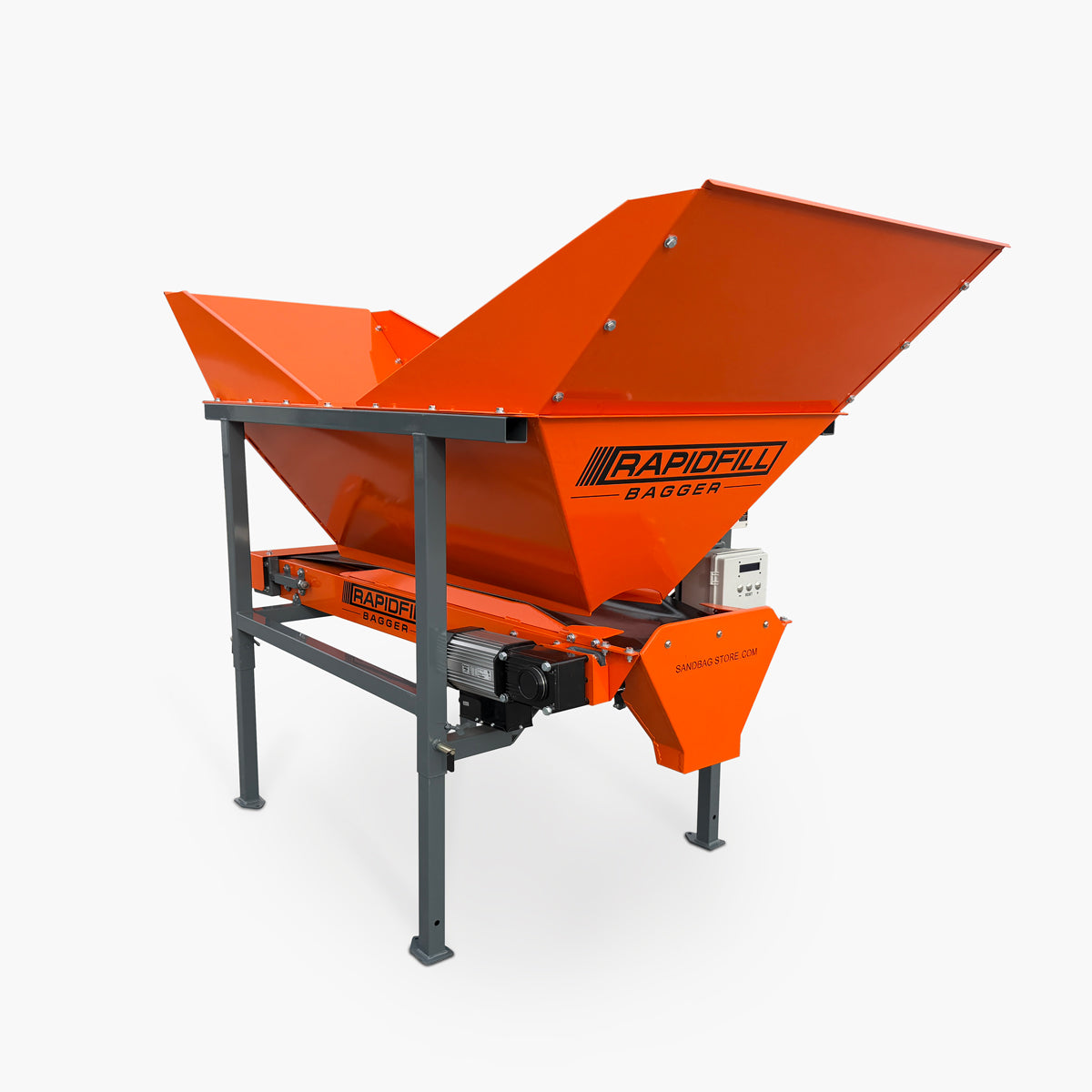
High-volume local sandbag production RapidFill Bagger™
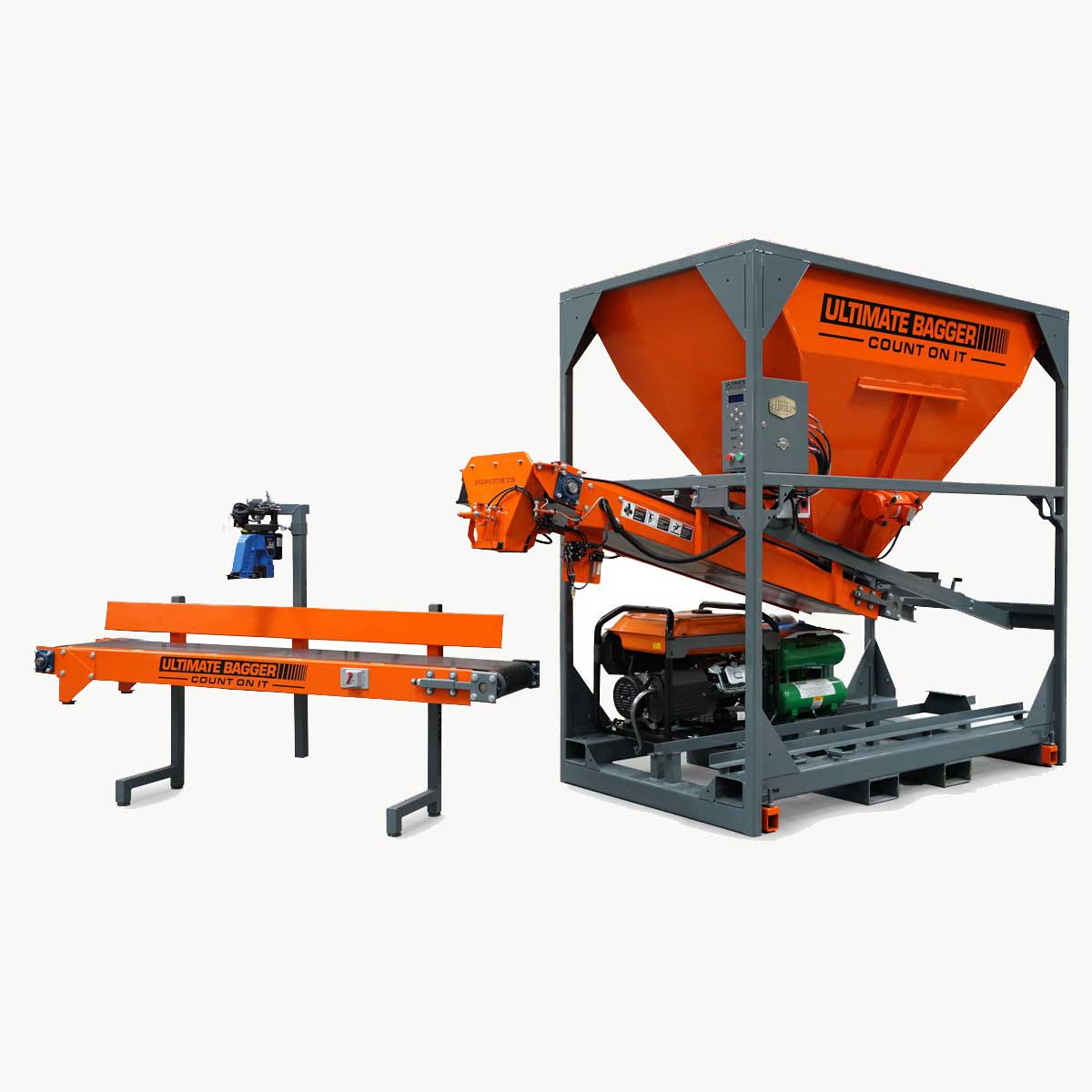
Ultimate Bagger®
Automated systems help contractors produce repeatable bag sizes at central yards or regional staging locations.

1. Pipeline Construction Begins with the Written Specification

Pipeline sandbags should never be selected only by price, color or nominal weight. Federally regulated pipeline construction is performed under comprehensive written standards, and individual operators frequently maintain additional requirements for pipe support, padding, coating protection, buoyancy control, environmental compliance and final restoration.

Before ordering, determine:

  • The exact function the sandbag will perform.
  • Whether the bag will contact the pipe or coating.
  • The approved fill material and aggregate gradation.
  • The required finished bag weight and dimensions.
  • Whether the bag remains after backfill or will be removed.
  • The required outdoor exposure or UV life.
  • Applicable operator, engineering, environmental and permitting requirements.
  • Required product data, fill documentation or domestic-origin information.
Specification Warning: Product descriptions are not substitutes for operator approval. Submit the proposed bag, fill, closure and finished weight to the pipeline owner, engineer, chief inspector or environmental inspector before deployment.

2. Sandbags for Pipe Support, Padding & Grade Adjustment

During lowering-in and backfilling, the pipeline must fit the ditch without unnecessary stress and must receive firm support that does not damage the pipe or protective coating. Where permitted by the project specification, sand-filled bags can form a conforming support beneath the pipe or help maintain a required elevation through irregular sections of the trench.

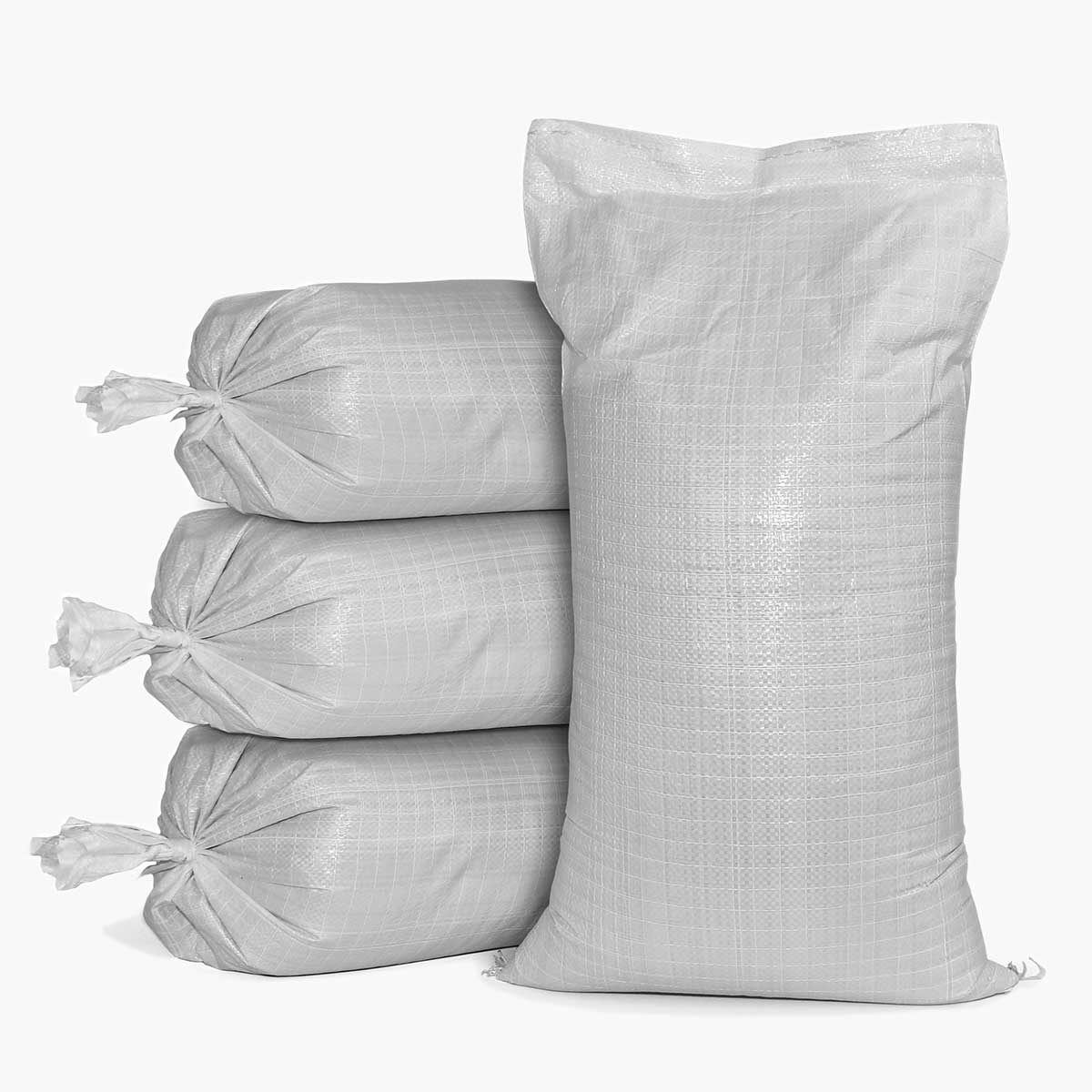
Economy Sandbags provide the lowest-cost standard option for high-volume work. Cactus® Sandbags provide a thicker woven shell where bags will experience more handling, sunlight or abrasion before backfill.

  • Use only the bag material and fill accepted by the operator or engineer.
  • Use clean fill free of sharp rock, construction debris and contaminants.
  • Keep ties, closures and protruding seams away from sensitive coating contact points.
  • Place bags rather than dragging them against coated pipe.
  • Maintain the specified support spacing and finished pipeline grade.
  • Avoid isolated point loading that could create unsupported spans or concentrated stress.
  • Inspect displaced, torn or leaking bags before backfill begins.
Pipe Support Insight: A soft bag exterior does not automatically make the support coating-safe. Fill gradation, trapped debris, seams, wire ties, bag placement and load distribution all affect the contact condition.

View Economy Pre-Filled Pallets View Cactus® Pre-Filled Pallets

3. Protecting Pipeline Coatings During Lowering-In & Backfill

External coating protects buried steel pipe from corrosion and must remain intact through transportation, handling, lowering-in and backfilling. Supporting materials can cause coating damage when they contain sharp aggregate, collect debris, shift under load or present concentrated contact points.

Before using a sandbag in direct contact with coated pipe:

  • Confirm that the bag fabric and fill are approved for the coating system.
  • Inspect the exterior for embedded rock, metal, mud, welding debris and sharp objects.
  • Orient closures, ties and stitched ends away from the pipe whenever required.
  • Do not place gravel-filled mesh bags directly against the coating unless the detail expressly permits it.
  • Prevent equipment from crushing or shifting bags against the pipe.
  • Repair coating damage identified before lowering-in or backfill.
  • Document any required inspections before the pipe is covered.
DuraBag® Placement Note: DuraBag® is primarily a permeable gravel-bag system. Its open mesh and aggregate-fill options make it useful for ROW drainage and erosion control, but it should not be assumed suitable for direct coated-pipe support without project approval.

4. Wet-Trench Ballast & Pipeline Buoyancy Control

An empty or partially completed pipeline can experience upward force in groundwater, saturated soil, marshes, floodplains and waterbody crossings. Sandbags may be used as temporary ballast, positioning aids or components of a project-specific buoyancy-control plan.

Buoyancy control is an engineering calculation. The required restraint may depend on:

  • Pipe outside diameter, wall thickness and material.
  • Coating, insulation, concrete coating or other external systems.
  • Whether the pipe is empty, water-filled or in service.
  • Groundwater elevation and expected seasonal variation.
  • Soil density, trench dimensions and backfill sequence.
  • Length of pipe exposed to buoyant conditions.
  • Flood, current, washout and scour potential.
  • Whether the ballast is temporary or part of the permanent installation.
Buoyancy Warning: There is no universal number of sandbags per foot of pipe. Do not substitute a rule of thumb for the engineered buoyancy-control design. Permanent systems may require concrete coating, set-on weights, anchors, geotextile weights or another approved method rather than conventional sandbags.

Large FIBC Bulk Bags and Big Hoss Sandbags® provide substantial mass for approved surface barriers, temporary stabilization and heavy-equipment installations. They should not be placed on or immediately beside pipe unless the engineered plan specifically accounts for the load, lifting method and coating protection.

5. Temporary Trench Plugs, Trench Breakers & Slope Breakers

Pipeline trenches can become unintended underground channels that carry water downslope. Temporary trench plugs segment an open trench before backfill, while slope breakers reduce runoff velocity and direct surface water away from the construction right-of-way.

Sandbags may be used as components of temporary trench plugs, temporary slope breakers and sediment barriers when the approved environmental plan allows them.

  • Use the spacing and location shown in the environmental or erosion-control plan.
  • Select the fill and bag permeability according to the intended hydraulic function.
  • Use tightly stacked sand-filled bags where the intent is to reduce trench-water movement.
  • Use permeable gravel bags where controlled drainage is part of the approved detail.
  • Direct slope-breaker outlets toward stable areas or approved energy-dissipation measures.
  • Do not redirect runoff into wetlands, waterbodies, roads or adjacent property.
  • Do not use segregated topsoil as unauthorized bag fill.
  • Distinguish temporary plugs from permanent trench breakers required after restoration.
Hydraulic Function Matters: A sand-filled standard bag may slow water movement, while an open-mesh gravel bag is designed to pass water. Choosing the wrong system can defeat the purpose of the trench plug or drainage control.

6. Right-of-Way Erosion & Sediment Control

Clearing, grading, trenching, spoil storage and equipment traffic expose soil across the construction right-of-way. Sandbags can provide modular controls that are installed early, moved as work advances and maintained until permanent stabilization is complete.

Common pipeline ROW applications include:

  • Temporary slope breakers and water bars.
  • Sediment barriers at the base of slopes.
  • Check structures in approved swales and drainage channels.
  • Protection around culverts and drainage outlets.
  • Geotextile, erosion-control blanket and liner hold-down.
  • Temporary diversion around active work areas.
  • Stabilization of transition points and disturbed embankments.
  • Emergency protection after heavy rainfall or washout.

DuraBag® Sandbags provide five-year UV-rated open mesh for long-duration gravel-filled installations. Geotextile Sandbags provide a nonwoven fabric option where published geotextile performance or finer separation is required.

Environmental Inspector Tip: Installations should be inspected for bypass, undercutting, overtopping, sediment accumulation, bag displacement and fabric damage. A durable bag still fails as a BMP when runoff simply flows around it.

View DuraBag® Sandbags View Geotextile Sandbags

7. Wetland, Waterbody & Trench-Dewatering Applications

Pipeline construction near wetlands and waterbodies requires site-specific controls that minimize sediment, preserve drainage and avoid redirecting contaminated or silt-laden water into sensitive resources.

Project-approved sandbag uses may include:

  • Temporary trench plugs near waterbody crossings.
  • Sediment barriers along the edge of authorized work areas.
  • Temporary isolation or diversion structures included in crossing plans.
  • Ballast around dewatering-discharge structures and energy dissipators.
  • Bank stabilization during final contour restoration.
  • Hold-down for approved erosion-control fabrics.
Water-Quality Limitation: Ordinary sandbags and gravel bags do not remove dissolved pollutants, fuels, drilling fluids or hazardous contaminants. Dewatering and waterbody controls must follow the approved discharge, spill-response and crossing plans.

Temporary dewatering structures and sediment barriers should be maintained while needed and removed when the project plan requires removal. Synthetic bag material and loose fragments should not be left within wetlands, waterways or restored habitat.

8. Emergency Washout & Exposed-Pipe Stabilization

Flooding, erosion, subsidence, slope movement and failed drainage can expose a previously buried pipeline or remove supporting soil. Sandbags can provide rapid temporary materials while the operator evaluates the condition and develops a permanent repair.

Potential emergency uses include:

  • Redirecting clean surface runoff away from the exposed area.
  • Providing temporary project-approved support beneath exposed pipe.
  • Stabilizing adjacent soil and channel transitions.
  • Protecting access routes and work areas from additional erosion.
  • Building temporary sediment barriers during repair activity.
  • Supporting tarps, liners and erosion-control fabrics.
Integrity Warning: Sandbags are not a substitute for an operator’s integrity assessment, coating inspection, engineering evaluation or permanent washout repair. Exposed or displaced pipe should be addressed under the pipeline owner’s emergency and integrity-management procedures.

9. Pipeline Sandbag Product Comparison

Product Construction & Outdoor Life Typical Pipeline Role Important Consideration
Economy Sandbags Woven polypropylene; approximately 2,000 UV hours or 12 months High-volume support, temporary plugs, sediment controls and general spread use Best for temporary or seasonal applications
Cactus® Sandbags 1480-denier woven polypropylene; approximately 4,000 UV hours or 24 months Heavy-duty support, repeated handling, longer spreads and medium-duration controls Standard product is imported; domestic sourcing requires a separate quote
Geotextile Sandbags 4 oz. or 8 oz. nonwoven polypropylene with published ASTM properties Drainage, grade control, sediment and environmental applications Use the project specification rather than assuming a universal service life
DuraBag® Sandbags Open polyethylene mesh; approximately 10,000 UV hours or five years Long-duration ROW drainage, erosion control, liner ballast and gravel-filled controls Fine sand requires a liner; mesh can snag when dragged
Tube Sand Triple-layer 60 lb bags with an approximately three-year canvas outer jacket Linear ballast, geofabric hold-down, equipment edges and temporary surface controls Pre-filled pallet contains thirty bags totaling approximately 1,800 pounds
Standard FIBC Bulk Bag Woven polypropylene; designed for approximately nine months of continuous sun Temporary barriers, aggregate staging, washout response and material handling Use all four forklift loops as directed; includes a bottom discharge spout
Big Hoss Sandbags® Inner bulk bag with five-year DuraBag® outer protection Long-duration large barriers, slope toes, washout protection and heavy-equipment placement Up to approximately 3,000 pounds; flat bottom with no discharge spout
Acrylic Sandbags
Acrylic Pre-Filled Pallets
Breathable acrylic fabric with approximately seven years of UV life; available empty or pre-filled in 3,000-pound pallet configurations Long-duration government, military, critical-infrastructure and domestic-source field applications Verify product-specific MIL-SPEC, NSN and Berry Amendment documentation against the solicitation

10. Choosing Pipeline Sandbag Fill Material

Fill media affects bag weight, drainage, coating contact, shape, freezing behavior and long-term performance. The project specification should always take precedence over general recommendations.

Fill Material Primary Characteristics Typical Pipeline Fit Important Consideration
C33-Spec Washed Sand Dense, consistent and readily conformable Project-approved pipe support, temporary ballast, trench plugs and general filled bags Availability does not mean C33 is required or accepted by every operator
1/4-Inch Washed Chip Rock Beds more tightly than larger gravel while providing drainage DuraBag® berms, erosion controls and long-duration ROW ballast Do not place against coated pipe unless specifically approved
1/2-Inch Washed Gravel Free-draining aggregate with reduced fines Permeable ROW controls, drainage, slopes and geotextile installations Verify gradation, cleanliness and bag retention before production
Local Soil or Unscreened Fill Variable moisture, density, particle size and contamination risk Only where evaluated and expressly permitted Rock, debris, organics and excessive fines can damage coating or change hydraulic performance
Weight-Control Tip: Moisture content changes finished bag weight. When the specification calls for a defined weight, verify representative filled bags rather than relying only on bucket volume or dispensing time.

11. Empty Bags or Pre-Filled Pipeline Sandbags?

Empty bags minimize storage volume and inbound freight weight. Pre-filled pallets reduce spread labor and arrive with consistent bag quantities and nominal weights.

Choose Empty Sandbags When:

  • Approved sand or gravel is available near the spread.
  • The contractor has a loader, filling system and bag-closing capability.
  • Finished weights vary between support, ballast and environmental applications.
  • Large quantities must be staged compactly before construction begins.
  • Regional production is more practical than shipping multiple filled pallets.

Choose Pre-Filled Pallets When:

  • Crews need bags ready for immediate placement.
  • Local fill, labor or closure equipment is unavailable.
  • Consistent bag weights simplify field planning and inspection.
  • Job-site filling would create dust, mud, traffic or cleanup problems.
  • A repair, tie-in or emergency response requires a defined quantity quickly.

Standard pre-filled pallets total approximately 3,000 pounds and are commonly available as:

  • 30 lb bags: Approximately 100 bags per pallet.
  • 40 lb bags: Approximately 75 bags per pallet.
  • 50 lb bags: Approximately 60 bags per pallet.

The Tube Sand pallet contains thirty 60-pound bags for approximately 1,800 pounds of ready-to-deploy linear ballast.

Spread Logistics Tip: Confirm the exact ship date, delivery window, road access, receiving contact, forklift or dock availability and liftgate requirement before scheduling freight to a remote spread or temporary yard.

12. Standard FIBC Bulk Bags vs. Big Hoss Sandbags®

Bulk bags provide much more mass per placement than conventional hand-carried sandbags. They are useful where loaders and forklifts are available and where the approved installation calls for large modular blocks.

Feature Standard FIBC Bulk Bag Big Hoss Sandbag®
Approximate Capacity Up to 3,000 lb, depending on fill Up to 3,000 lb
Dimensions Approximately 36 × 36 × 40 inches Approximately 36 × 36 × 40 inches empty
Outdoor Life Approximately nine months of continuous sunlight Five-year UV-rated DuraBag® outer wrap
Bottom Closeable discharge spout Flat bottom without discharge
Best Fit Temporary barriers, material staging and applications requiring controlled emptying Long-duration barriers, washout protection, slope toes and outdoor stabilization
Bulk-Bag Handling: Inspect every lift loop before moving a filled bag. Use the lifting method specified for the product and keep personnel clear of suspended loads. Standard FIBC bags should not be center-picked from one loop or lifted by improvised crane hardware.

View Standard Bulk Bags View Big Hoss Sandbags®

13. Build a Pipeline Sandbag Production Operation

Mainline contractors, mobile filling services and material yards may require thousands of bags across multiple spreads. Automated filling can reduce hand shoveling, improve production tracking and provide more repeatable bag sizes.

RapidFill Bagger™

The RapidFill Bagger™ is a compact system for contractors and yards moving beyond manual filling.

  • Approximately 750 bags per hour in the standard configuration.
  • Up to approximately 1,000 bags per hour with the optional closing system.
  • One-cubic-yard hopper with material agitation.
  • Programmable dispensing for repeatable fills.
  • Production counters and pallet-complete alarm.
  • Controlled fill range from approximately 1 to 250 pounds.

Ultimate Bagger®

The Ultimate Bagger® is the larger production system for regional yards, major spreads and continuous high-volume operations.

  • Fills and seals up to approximately 1,200 sandbags per hour with a four-person crew.
  • Two-yard hopper with dual agitators for wet or difficult material.
  • Integrated industrial bag-sewing system.
  • Programmable digital dispensing and production counts.
  • Supports multiple bag fabrics and compatible flowable materials.
  • Forklift pockets allow relocation within a production yard.
Production Planning Tip: Evaluate required daily volume, loader capacity, fill moisture, bag closure, staffing, pallet handling, generator needs and delivery distance before selecting a filling system.

View RapidFill Bagger™ View Ultimate Bagger®

14. Estimating Pipeline Sandbag Quantities

There is no dependable universal number of sandbags per mile of pipeline. A flat, dry spread requiring occasional supports may use far fewer bags than a steep alignment with trench plugs, waterbody crossings, environmental controls and wet-trench ballast.

Planning Formula:
Pipe-support locations × bags per support
+ temporary trench plugs × bags per plug
+ slope breakers and sediment barriers × bags per control
+ liner, fabric and equipment ballast
+ project-approved reserve inventory
= estimated project quantity.

Before ordering, document:

  • Pipeline length, diameter and construction spread sequence.
  • Number of support and grade-adjustment locations.
  • Required support spacing and bags per support.
  • Number and dimensions of trench plugs and slope breakers.
  • Waterbody, wetland and dewatering controls.
  • Emergency and replacement inventory.
  • Selected bag weight and fill material.
  • Empty-bag or pre-filled-pallet strategy.
  • Available unloading and material-handling equipment.
  • Storage yards and distance to active work fronts.

15. Sandbags Do Not Replace Trench Protection

The phrase “trench support” can describe support placed beneath a pipeline, but sandbags are not a worker cave-in protection system. They do not replace sloping, benching, shoring, shielding or another protective system selected under applicable excavation-safety requirements.

  • A competent person should inspect excavations and protective systems as required.
  • Workers should not enter an excavation that lacks the required cave-in protection.
  • Provide safe access and egress where employees enter the trench.
  • Address standing water, atmospheric hazards and changing soil conditions.
  • Keep pallets, filled bags and other materials back from excavation edges or restrain them from falling in.
  • Do not place employees beneath suspended bulk bags or equipment loads.
  • Use suitable lifting practices for individual bags and mechanical assistance for bulk units.
Critical Safety Distinction: Pipeline-support bags support the pipe. OSHA-compliant excavation systems protect the people working in and around the trench.

16. Field Inspection, Documentation & Restoration

Pipeline sandbags should be inspected as materials arrive, as they are filled, after placement and before they are covered or left in long-term service.

  • Confirm bag type, fill, weight and quantity against the purchase order and approved submittal.
  • Inspect seams, ties, liners, fabric and lifting loops for damage.
  • Remove contaminated, leaking or incorrectly filled bags.
  • Verify direct-contact bags remain clean and properly oriented against the pipe.
  • Check environmental controls after rainfall, equipment traffic and construction changes.
  • Repair bypass, undercutting, settlement and displaced bags promptly.
  • Document permanent bags that remain below grade or within completed controls.
  • Remove temporary bags when restoration plans require removal.
  • Recover synthetic fabric and loose fragments from the ROW.
  • Retain product, fill and inspection documentation required by the operator.

17. Pipeline Bid & Submittal Checklist

Include the following information when requesting a pipeline sandbag quote:

  • Bag material, dimensions and required service life.
  • Empty or pre-filled configuration.
  • Approved fill material and gradation.
  • Nominal finished weight and allowable tolerance.
  • Required pallet count and total project quantity.
  • Direct coated-pipe contact requirements.
  • Color or project-zone identification.
  • Product-origin, MIL-SPEC, NSN or Berry requirements where applicable.
  • Required specification sheets or fill documentation.
  • Commercial dock, forklift, liftgate or remote-delivery requirements.
  • Required-on-site date and receiving contact.
Procurement Insight: Request documentation by product and order. Do not assume that every sandbag line has the same origin, UV rating, fill material, regulatory status or procurement certification.

Related Pipeline & Site-Protection Guides

Pipeline Sandbag Products

18. Why Pipeline Contractors Choose The Sandbag Store®

  • Multiple service-life options: Select temporary, medium-duration, five-year or seven-year products.
  • Sand and gravel systems: Choose dense support fill or permeable aggregate according to the project.
  • Empty or pre-filled: Fill locally or receive consistent palletized weights ready for deployment.
  • Hand-placed and machine-placed options: Conventional bags, Tube Sand and large FIBC barriers.
  • Published product information: UV, fabric, fill and performance data available for submittal review.
  • Scalable production: RapidFill™ and Ultimate Bagger® equipment support contractor filling operations.
  • Procurement choices: Product-specific domestic, MIL-SPEC and Berry options are available where required.
  • Volume support: Pallet, multi-pallet and large-project quotes for active spreads and regional yards.
  • Direct fulfillment: Purchase bags, pallets and filling equipment from a specialized sandbag supplier.
Bottom Line: Pipeline sandbags should be selected as part of the complete construction plan. Economy and Cactus® bags serve high-volume support and temporary controls; DuraBag® and Geotextile bags support ROW drainage and erosion work; Bulk and Big Hoss® bags provide heavy-equipment-scale barriers; and automated baggers create local production capacity.

Need help matching bag fabric, fill material, finished weight, pallet quantity or filling equipment to a pipeline specification? Request a pipeline sandbag quote or call 1-800-550-1235.

Pipeline Sandbag FAQs

What is the best sandbag for pipeline construction?

The best product depends on the task. Economy Sandbags are a cost-effective option for high-volume temporary work. Cactus® Sandbags provide a thicker shell and longer outdoor life. DuraBag® and Geotextile Sandbags are better suited to permeable ROW drainage and erosion controls. Bulk Bags and Big Hoss Sandbags® provide large machine-placed barriers. The pipeline operator or engineer should approve the bag and fill before use.

Can sandbags be placed directly under coated pipe?

Only when the pipeline specification permits the selected bag, fill and placement method. Direct-contact bags should be clean and free of sharp aggregate or debris, and ties, seams and closures should be oriented as required to protect the coating. Gravel-filled mesh bags should not be assumed appropriate for direct pipe contact.

How many sandbags are needed per mile of pipeline?

There is no standard number per mile. Quantity depends on support spacing, pipe diameter, trench conditions, wet areas, trench plugs, slope breakers, waterbody crossings, environmental controls and reserve inventory. Calculate each installation type from the approved drawings and combine the quantities for the complete spread.

Can ordinary sandbags control pipeline buoyancy?

Sandbags may serve as temporary ballast or as components of an engineered system, but buoyancy control must be calculated for the pipe, groundwater, soil and installation conditions. Permanent installations may require concrete coating, set-on weights, anchors, geotextile weights or another approved system.

Can sandbags be used for pipeline trench plugs and slope breakers?

Yes, when the approved environmental plan permits them. FERC’s baseline upland plan identifies sandbags as a potential material for temporary trench plugs, temporary slope breakers and sediment barriers. The bag fill, permeability, location and outlet configuration must match the intended hydraulic function.

What is the difference between Economy, Cactus®, DuraBag® and Geotextile Sandbags?

Economy Sandbags are an affordable woven polypropylene option with approximately one year of UV life. Cactus® Sandbags use thicker polypropylene and provide approximately two years of UV life. DuraBag® uses open polyethylene mesh with a five-year UV rating for gravel-filled drainage and erosion controls. Geotextile Sandbags use nonwoven polypropylene and offer published ASTM fabric-performance data.

Should pipeline contractors buy empty or pre-filled sandbags?

Empty bags are economical to store and transport when approved fill, labor and filling equipment are available near the spread. Pre-filled pallets reduce job-site labor and arrive in consistent nominal weights. Standard 3,000-pound pallets are commonly configured as one hundred 30-pound bags, seventy-five 40-pound bags or sixty 50-pound bags.

Do pipeline sandbags protect workers from trench cave-ins?

No. Sandbags may support the pipeline or form environmental controls, but they are not excavation shoring, shielding, sloping or benching systems. Worker cave-in protection must comply with applicable OSHA excavation requirements and be selected and inspected by qualified personnel.

Are long-life and domestic pipeline sandbags available?

Yes. DuraBag® provides approximately five years of UV life, while Acrylic Sandbags provide an approximately seven-year USA-made option available as empty 100-packs or factory-filled 3,000-pound pallets. Product-specific MIL-SPEC, NSN and Berry Amendment documentation should be reviewed against the exact contract or solicitation before ordering.

Need a Custom Quote?

Fill out our online quote form and we’ll provide you with a fast, easy estimate

Quick Quote Form