


LIGHTING & GRIP
-

Saddle Sandbags – Pre-Filled Pro Grade Weight Bags with Handle
$25.50Saddle Sandbags
$25.50 -
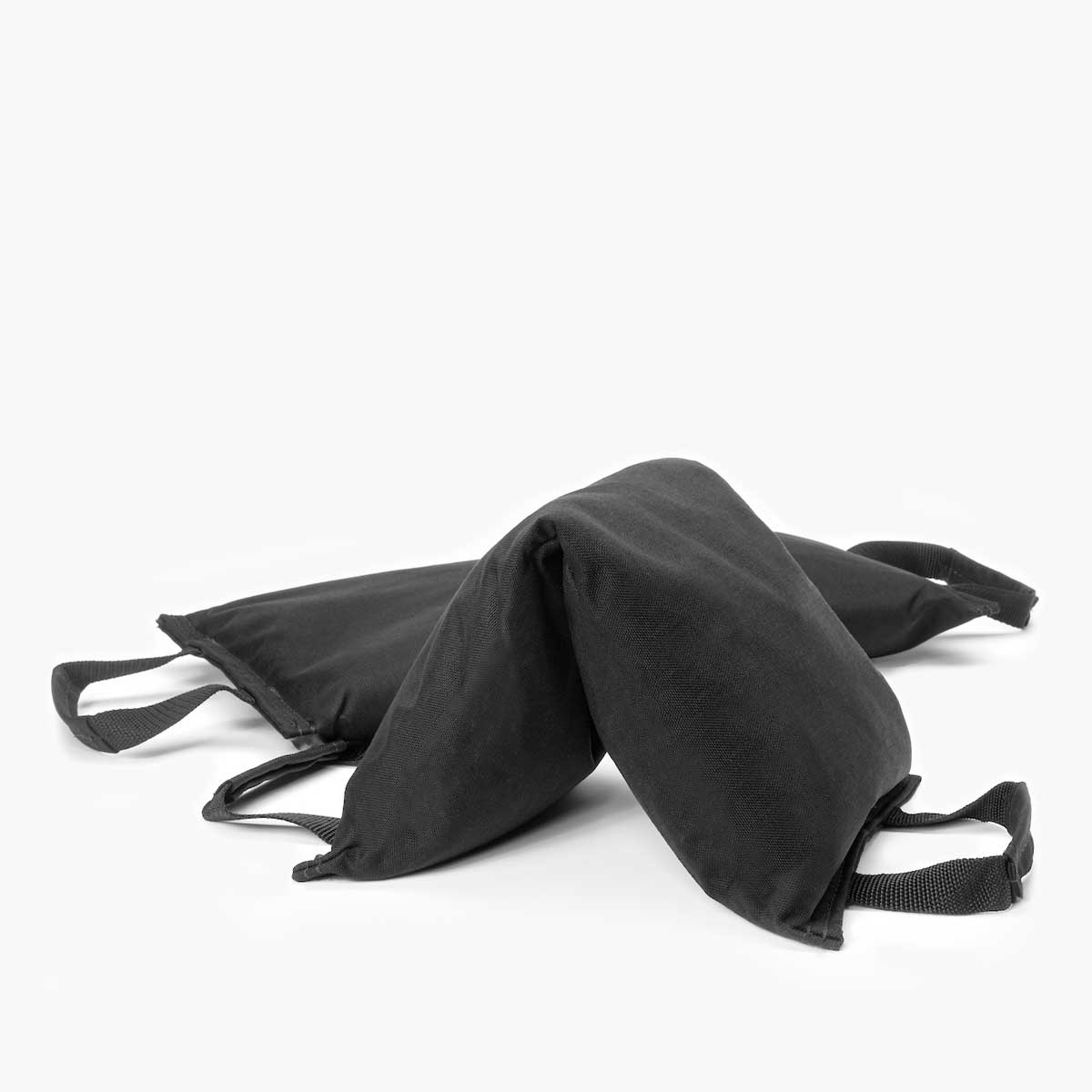
Dual-Handled Sandbags – Easy-Lift, Triple-Layer, Prefilled Weight Bags
$54.50Dual-Handled
$54.50 -

DropWeight Rigging Sandbags — Pre-Filled Hanging Weights
$38.00DropWeight®
$38.00 -

Ballast Bags – Sand or Steel Shot Filled Soft Weights
$22.00Ballast Bags
$22.00 -

Circular Sandbags – Stackable Round Weight Bags for Stands & Umbrellas
$38.00Circular
$38.00 -

Butterfly Sandbags — Quick-Release Pro-Grade Weight Bags
$32.25Butterfly
$32.25 -

Apex® Canopy Sandbags – Heavy-Duty Tent & Awning Weights
$32.00Apex® Tent Weights
$32.00


Production Sandbags for Lighting, Grip & Display
Professional Weight Bags for Film, Photography, Broadcast, Stage & Live Events
On a professional set, a sandbag is not an afterthought. It is part of the support system protecting lights, cameras, monitors, microphones, modifiers, scenery, displays and the people working around them. The right production weight helps stabilize top-heavy stands, counterbalance extended booms, secure temporary equipment and keep fast-moving sets organized without introducing hard edges, loose fill or improvised ballast.
The Sandbag Store® manufactures USA-made lighting and grip sandbags for grips, gaffers, photographers, camera departments, broadcast studios, theater crews, AV technicians, live-event producers, rental houses, schools, content studios and trade-show teams. Choose classic Saddle Sandbags, fast-release Butterfly Sandbags, hanging DropWeight Sandbags®, stackable Circular Sandbags, compact Ballast Bags, ergonomic Dual-Handled Sandbags or outdoor Apex® Canopy Sandbags.
Production Insight: The best sandbag is determined by more than its weight.
Crews should also consider where the bag will sit, whether it must hang or drape,
how often it will be moved, how much floor space is available, whether the setup is indoors or outdoors,
and whether sand or steel shot provides the better profile.
Who Uses Lighting & Grip Sandbags?
- Film & Television Crews: C-stands, combo stands, flags, frames, booms, scenery and temporary rigging.
- Photographers & Photo Studios: Light stands, modifiers, reflectors, backgrounds, camera tripods and tether stations.
- Broadcast & Streaming Studios: Camera supports, teleprompters, microphones, monitors and compact studio lighting.
- Theater & Performing Arts: Stage lighting, scenery, temporary masking, microphone stands and backstage equipment.
- Live-Event & AV Teams: Speaker stands, video walls, pipe-and-drape, projectors, lighting trees and production tents.
- Rental Houses: Durable, identifiable weight bags that can withstand frequent checkout, transport and return.
- Trade Shows & Retail Displays: Signs, kiosks, display towers, banners and temporary branded installations.
- Schools & Content Creators: Studio lighting, podcast equipment, media labs and multipurpose production spaces.
Lighting & Grip Sandbag Selection Guide
Start with the equipment and how the ballast needs to interact with it. The bag’s shape and handling system are often as important as the amount of weight inside.
| Production Requirement | Recommended Product | Why It Fits |
|---|---|---|
| Everyday C-stands, light stands, flags and reflectors | Saddle Sandbags | Classic two-pocket design drapes over a stand leg and includes a centered handle for balanced carrying. |
| Fast resets and frequent stand repositioning | Butterfly Sandbags | Edge-mounted handle lifts both pockets upward so the bag releases quickly from stand feet and lower frame members. |
| Hanging ballast and approved counterweight points | DropWeight Sandbags® | Purpose-built hanging strap, stainless-steel hardware, weight ID tag and self-standing round base. |
| Tripods, sliders, monitor stands and post-style bases | Circular Sandbags | Wraps around poles and bases up to approximately 4 inches in diameter and stacks when additional ballast is required. |
| General-purpose floor, platform or display ballast | Ballast Bags | Simple rectangular, sewn-shut profile fits beneath platforms, scenery, signs and equipment where handles are unnecessary. |
| Frequent movement of heavier weights | Dual-Handled Sandbags | Two reinforced grips and padded triple-layer construction support controlled lifting and precise placement. |
| Exterior shoots, video villages, tents and pop-up shelters | Apex® Canopy Sandbags | Full-length leg wrap, D-ring and adjustable hurricane strap provide three attachment methods for approved canopy setups. |
1. Why Professional Sets Need Purpose-Built Weight Bags
A production environment places different demands on ballast than a garage or construction site. Bags may be moved dozens of times in a day, loaded into grip trucks, dragged across stages, stacked in carts and positioned next to equipment worth thousands of dollars.
Purpose-built production sandbags provide advantages that improvised weights, loose bags and rigid blocks cannot:
- Equipment-friendly exteriors: Soft fabric helps reduce scratches and hard contact with stands, cases and scenery.
- Controlled fill containment: Internal liners and sewn-shut construction on applicable models help reduce dust and leaks.
- Useful geometry: Saddle, circular, hanging and rectangular profiles fit different equipment types.
- Low center of gravity: Weight can remain close to the stand or support base.
- Professional handling: Reinforced handles and purpose-built straps make setup and reset more efficient.
- Modular loading: Crews can add, remove or redistribute individual weights as the setup changes.
- Visual organization: Colors, weight tags and custom printing simplify departmental control.
- Replaceable components: A worn bag can be removed without replacing an entire stand or support system.
Important Safety Principle: A heavier sandbag does not increase a stand’s rated payload.
Ballast helps resist tipping, but lights, modifiers, booms, stands, clamps and rigging hardware must remain
within their manufacturers’ load limits and approved configurations.
2. Saddle or Butterfly? Choosing a Stand-Leg Sandbag
Saddle Sandbags and Butterfly Sandbags both use a two-pocket design, but their handles create different workflows.
| Feature | Saddle Sandbag | Butterfly Sandbag |
|---|---|---|
| Handle Position | Centered between the two weighted pockets | Spans the outside edges of the two pockets |
| Lifting Motion | Balanced pick-and-place carrying | Pockets swing upward like wings and clear the stand quickly |
| Available Weight Range | Approximately 5–50 lb, depending on selected fill | Approximately 10–25 lb in sand or steel-shot configurations |
| Best Workflow | General production, studio inventory and traditional grip handling | Fast resets, changing configurations and repeated repositioning |
| Additional Features | Custom handle colors and optional logo printing | Integrated D-rings and optional logo printing |
Saddle Sandbags: The Production Standard
Saddle Sandbags are prefilled, permanently sewn shut and built with abrasion-resistant Cordura® nylon. Each pocket contains a sealed liner that helps retain the fill and preserve the bag’s shape. A centered webbing handle makes the weight balanced and predictable when moving it between stands.
- Sand or steel-shot fill across multiple weight classes.
- Available from compact 5-pound bags through 50-pound steel-shot weights.
- Load-cell filling with a typical listed tolerance of approximately ±2 ounces at 25 pounds.
- Custom bag and handle colors for crew or weight identification.
- Optional single-color screen printing for production, studio or rental-house branding.
Butterfly Sandbags: Built for Faster Resets
Butterfly Sandbags, sometimes called fly-away sandbags, move differently when lifted. The handle joins the outside pocket edges, causing both weighted sections to swing upward and release from the stand leg. This design can save time when crews repeatedly move fixtures, flags and stands.
- 1000D Cordura® nylon exterior.
- Internal 6 mil liners for fill containment and moisture resistance.
- Available in sand or steel-shot configurations from approximately 10 to 25 pounds.
- Integrated D-rings for approved attachment or organization uses.
- Prefilled and permanently closed for immediate deployment.
View Saddle Sandbags View Butterfly Sandbags
3. DropWeight Sandbags® for Hanging Counterbalance
Draping a bag over a stand leg and suspending a counterweight are different jobs. DropWeight Sandbags® are specifically designed for hanging applications where the weight must remain compact, identifiable and connected through a purpose-built strap system.
- 22-inch reinforced hanging strap loop with double D-ring tightening.
- Detachable strap and stainless-steel hardware for approved attachment points.
- Self-standing 5-inch round base for stable staging before installation.
- Side carry handle for transport without lifting from the hanging strap.
- External weight ID tag for fast verification during setup.
- Sand or steel-shot options across multiple weight classes up to 50 pounds.
- Black, blue and orange options for crew or zone identification.
DropWeight bags can support approved counterweight applications involving booms, truss systems, technical equipment, scenic elements and other production hardware that calls for suspended ballast.
Rigging Safety: Do not hang an ordinary sandbag by a carry handle merely because the handle
fits over a hook. Hanging ballast should use a purpose-built product, an approved attachment point and a
rigging plan established by qualified personnel. A counterweight does not replace required safety cables,
secondary restraints or rated rigging components.
4. Circular & Rectangular Ballast for Bases, Cameras and Displays
Not every support accepts a draped saddle bag. Camera systems, display bases, slider stands, monitor stands, pipe-and-drape uprights and compact studio equipment often need weight concentrated around or beside the base.
Circular Sandbags
Circular Sandbags wrap around a vertical post or base instead of hanging from a stand leg. Their central opening fits posts up to approximately 4 inches in diameter, and multiple bags can be stacked when the equipment configuration calls for additional weight.
- Available empty, prefilled with 25 pounds of chip sand or prefilled with 50 pounds of steel shot.
- Approximately 12 × 12 × 3 inches with a 4-inch center opening.
- Locking clasp and heavy-duty zipper for installation around a post.
- Built-in carry handle for transport and placement.
- Optional fitted UV covers for approximately three years of direct-sun protection.
- Useful around tripods, mic stands, light stands, displays, speakers and post-style equipment.
Ballast Bags
Ballast Bags use a straightforward rectangular profile without the extra geometry of a saddle or circular bag. They are useful where crews need stable mass beneath, behind or beside equipment and do not need to drape the weight over a leg.
- Available from approximately 5 to 50 pounds, depending on fill selection.
- Sand-filled versions provide economical general-purpose weight.
- Steel-shot versions provide the same mass in a substantially smaller footprint.
- 1000D Cordura® shell with water-repellent coating.
- Sealed inner liner and double lock-stitched seams help contain fill.
- Typical listed filling tolerance of approximately ±2 ounces at 25 pounds.
View Circular Sandbags View Ballast Bags
5. Dual-Handled Sandbags for Controlled Heavy Lifting
Moving a heavier weight with one centered handle is not always the best fit for every person, position or workspace. Dual-Handled Sandbags provide two reinforced grips so crew members can lift, carry and lower the weight with greater control.
Their slightly tubular profile also nests around equipment and fits into spaces where a wide rectangular bag can be awkward.
- 10 lb sand-filled model for lighter equipment and controlled placement.
- 25 lb steel-shot model for moderate compact ballast.
- 50 lb steel-shot model for substantial weight in a smaller footprint.
- Two 7-inch Cordura®-wrapped handles for controlled lifting.
- Triple-layer construction: Cordura® shell, sealed vapor barrier and padded felt interior.
- Prefilled and sewn shut to reduce mess and preparation time.
Handling Insight: Two handles can improve control, but they do not make a heavy bag
appropriate for every individual lift. Follow production lifting procedures and use team lifting or
mechanical assistance whenever the weight, position or working environment requires it.
6. Apex® Sandbags for Exterior Shoots & Production Tents
Exterior productions often include pop-up shelters, makeup tents, video villages, camera-control stations, equipment covers, sponsor tents and temporary work areas. These structures require ballast designed to remain close to the canopy leg while supporting the manufacturer-approved attachment configuration.
Apex® Canopy Sandbags provide three available securement methods:
- Full-length Velcro® wrap around the canopy leg.
- Sewn-in D-ring for an approved guyline or tether.
- Included adjustable hurricane strap connecting the bag to an upper canopy corner.
- Empty models with 25- or 40-pound fill capacity.
- Prefilled 25-pound chip-sand or 50-pound steel-shot models.
- Full-circle zipper opening on empty configurations for easier filling.
- 1000D Cordura® exterior and integrated carry handle.
- Tall, narrow profile designed to remain close to the canopy leg.
- Optional logo or department printing for production ownership identification.
Exterior Safety Reminder: No sandbag creates an unlimited wind rating.
Follow the canopy manufacturer’s ballast and shutdown instructions, monitor changing weather and maintain
a site-specific plan for lowering, striking or evacuating temporary equipment when conditions become unsafe.
View Apex® Canopy Sandbags Read the Canopy Weight Guide
7. Sand vs. Steel Shot for Production Weight Bags
Both materials provide dependable ballast. The better choice depends on space, budget, weight, handling and how the bag needs to conform to the equipment.
| Fill Option | Advantages | Best Production Fit | Considerations |
|---|---|---|---|
| Sand | Economical, malleable and familiar to most crews | General stand ballast, studio inventories and larger floor weights | Requires a physically larger bag than steel shot at the same weight |
| Steel Shot | Substantially more mass in a compact footprint | Tight stages, narrow stand legs, booms, vehicle interiors and crowded studio floors | Higher cost and a small bag may feel heavier than its appearance suggests |
| Empty / Local Fill | Lower inbound shipping weight and flexibility to source fill near the location | Touring crews, remote locations and outdoor operations with suitable fill access | Requires filling labor, clean media and proper closure before use |
Compact-Weight Insight: Steel shot does not create more holding force than the same weight
of sand. Its advantage is density: the selected weight can fit into a smaller bag that occupies less floor,
stand-leg or storage space.
8. How Much Sandbag Weight Does a Stand Need?
There is no universal sandbag weight for every light stand, C-stand, boom, tripod or display. The correct amount depends on the complete setup, not the stand alone.
Before selecting a bag, evaluate:
- Stand capacity: The manufacturer’s rated payload and approved operating configuration.
- Equipment weight: Fixture, camera, monitor, modifier, flag, frame, cable and accessory mass.
- Working height: Raising the load increases leverage and overturning potential.
- Boom extension: A longer horizontal reach produces more leverage at the base.
- Surface area: Softboxes, reflectors, frames and fabrics can catch significant air movement.
- Footprint: Narrow or partially folded legs may provide less resistance to tipping.
- Floor condition: Slopes, cables, uneven ground and slick surfaces affect stability.
- People and movement: Crowded sets, performers, carts and rapid resets increase incidental-contact risk.
- Indoor or outdoor use: Wind and weather can change a previously stable configuration.
Sandbag Store production weights span multiple classes from approximately 5 through 50 pounds. This allows a production to standardize several useful increments rather than forcing one weight to serve every setup.
Selection Principle: Use the stand or equipment manufacturer’s instructions as the starting point.
Then account for the actual load, extension, environment and crew safety plan. When a setup cannot be made stable
within its approved operating limits, change the stand, support method or rig rather than continuing to add bags.
9. Correct Sandbag Placement on Set
The amount of ballast matters, but placement determines whether that weight can effectively resist the load.
- Bag the leg beneath the load: Position the sandbag on the stand leg that supports the direction of the fixture, arm, flag or modifier.
- Keep the bag engaged: A saddle bag should hang on the stand leg rather than rest completely on the floor, where it contributes less effective counterweight.
- Keep weight low: Place ballast near the base unless the equipment is specifically designed for a hanging counterweight.
- Balance the configuration: Do not create a new lean or twist by placing all weight on the wrong side.
- Protect clear paths: Keep bags and handles out of aisles, camera moves, performer paths and emergency routes.
- Do not obscure controls: Leave brakes, knobs, casters, leveling legs and release mechanisms accessible.
- Recheck after every move: A stand that was properly bagged before a reset may not be properly bagged afterward.
- Control moving ballast: Remove or secure weights before rolling or carrying equipment so bags do not swing unexpectedly.
- Use designated hanging systems: Do not suspend ordinary bags from handles, zippers or unapproved hardware.
Set Safety Reminder: A sandbag is one part of a safe support system.
Proper stand selection, leg orientation, clamps, brakes, secondary restraints, cable management,
crew communication and weather awareness remain essential.
10. Clean Ballast Around Cameras, Lenses & Electronics
Fine dust, loose sand and leaking filler create unnecessary problems around cameras, lenses, lighting controls, computers and finished sets. This is one reason many production teams prefer factory-filled and permanently closed bags.
- Sealed liners: Help isolate fill from the outer fabric and surrounding equipment.
- Sewn-shut construction: Eliminates filler openings on applicable models.
- Controlled media: Factory filling produces consistent weights without job-site shoveling.
- Soft exteriors: Reduce hard-edge contact with cases, flooring, scenery and equipment.
- Inspection before use: Damaged seams, liners, zippers or closures should be addressed before deployment.
- Clean staging: Brush dirt and grit from bags before bringing them onto polished floors or finished stages.
Floor Protection Tip: Even a soft Cordura® bag can trap abrasive debris underneath it.
Clean the bag and floor before placement, and use an appropriate protective mat on highly sensitive surfaces.
11. Stage, Trade Show & Display Applications
Lighting and grip weights are also useful anywhere temporary equipment must remain stable without drilling, bolting or adding visible hard ballast.
- Pipe-and-drape uprights and crossbars
- Stage flats, masking and temporary scenic walls
- Step-and-repeat backgrounds and photo activations
- Trade-show signs, banners and display towers
- Speaker stands and compact AV systems
- Teleprompters, monitors and confidence displays
- Retail kiosks and temporary branded installations
- Microphone stands and boom arms
- Projection screens and portable equipment tables
Circular Sandbags work well around post-style bases, while Ballast Bags can be concealed beneath platforms or behind scenic elements. Saddle Sandbags remain useful where the weight can drape over a lower frame member or stand leg.
12. Production Branding, Color Coding & Loss Prevention
Weight bags tend to migrate between departments, stages, vendors and trucks. A consistent identification system helps crews return the correct equipment and makes inventory easier to count.
- Color-code weight classes: Assign one handle or bag color to each nominal weight.
- Separate departments: Distinguish electric, grip, camera, sound, art and event inventory.
- Identify rental ownership: Add a rental-house or production-company logo.
- Mark stages or trucks: Use a department, location or unit identifier.
- Reduce walk-offs: Clearly branded bags are easier to recognize and return.
- Improve professionalism: Matching bags present better in studios, corporate work and public events.
Selected Saddle, Butterfly, Dual-Handled, DropWeight and Apex® products offer optional single-color screen printing. Saddle Sandbags also offer multiple custom handle colors, while DropWeight bags include an external weight-identification tag.
Rental-House Tip: Print the nominal weight and asset identifier in addition to the company name.
The bag can then be checked visually without relying only on its size, which can be misleading when steel-shot
and sand-filled versions are mixed.
13. Building a Standardized Production Sandbag Kit
A well-planned inventory combines several bag shapes instead of purchasing one universal model. The following is an inventory framework, not a substitute for setup-specific ballast calculations.
| Inventory Role | Product Family | Purpose |
|---|---|---|
| Everyday stand weights | Saddle Sandbags | General light stands, C-stands, tripods, frames and common grip setups |
| Fast-reset inventory | Butterfly Sandbags | Frequent repositioning, changing sets and rapid production workflows |
| Hanging counterweights | DropWeight Sandbags® | Approved booms, truss, scenic and suspended counterweight applications |
| Low-profile base ballast | Circular Sandbags and Ballast Bags | Posts, cameras, displays, platforms and compact floor placements |
| Controlled heavy handling | Dual-Handled Sandbags | Heavier weights that require two-handed lifting and precise lowering |
| Exterior production support | Apex® Canopy Sandbags | Video villages, tents, temporary shelters and approved outdoor structures |
Before placing a production or rental-house order, document:
- The most common stand, boom, tripod and display configurations.
- The weight classes currently used by the crew.
- Where compact steel-shot bags would reduce congestion.
- How many bags require handles, hanging straps or post openings.
- Whether the inventory will be used indoors, outdoors or both.
- Department, asset-number, logo and color-coding requirements.
- Storage-cart, truck, case and delivery limitations.
- Reserve inventory for damage, overlapping productions and last-minute additions.
Detailed Lighting, Stage & Display Guides
- Best Sandbags for Light Stands
- Sandbags for Mic Stands
- Sandbags for Canopy Tents & Awnings
- Sandbags for Events, Tents & Outdoor Production
- Sandbags for Signs & Displays
Lighting & Grip Sandbag Products
- Saddle Sandbags — Prefilled Professional Stand Weights
- Butterfly Sandbags — Quick-Release Production Weights
- DropWeight Sandbags® — Hanging Rigging Counterweights
- Circular Sandbags — Stackable Post and Base Weights
- Ballast Bags — Rectangular Sand or Steel-Shot Weights
- Dual-Handled Sandbags — Easy-Lift Triple-Layer Weights
- Apex® Canopy Sandbags — Exterior Tent and Shelter Weights
14. Why Production Professionals Choose The Sandbag Store®
- Complete production lineup: Drape-over, quick-release, hanging, circular, rectangular and dual-handle designs.
- Sand or steel-shot options: Balance budget, size, density and placement requirements.
- Factory-filled choices: Receive weights ready for immediate studio or location deployment.
- Professional construction: Cordura® fabrics, internal liners, reinforced webbing and industrial stitching on applicable products.
- Multiple weight classes: Select compact, general-purpose and heavy ballast from one manufacturer.
- Customization: Add logos, department identifiers and selected handle or bag colors.
- Volume purchasing: Quantity discounts and custom quotes for studios, rental houses and large productions.
- Made in the USA: Manufactured and filled directly by The Sandbag Store®.
- Free shipping: Standard shipping is included on qualifying products within the Lower 48.
Bottom Line: A professional production inventory needs more than one generic sandbag.
Saddle bags support everyday stands, Butterfly bags speed resets, DropWeight bags handle approved hanging
counterbalance, Circular and Ballast bags solve compact base-weighting needs, Dual-Handled bags improve
controlled movement and Apex® bags support exterior production shelters.
Need help choosing weight classes, fill media, bag shapes, colors or production quantities? Request a lighting and grip quote or call 1-800-550-1235.
Lighting & Grip Sandbag FAQs
What is the best sandbag for a C-stand or light stand?
Saddle Sandbags are the traditional all-purpose choice for C-stands, light stands, flags and modifiers. Their two-pocket design drapes over a stand leg, while the centered handle supports balanced carrying. Butterfly Sandbags perform a similar role but use an edge-mounted handle that lifts both pockets upward for faster removal during frequent resets.
What is the difference between a Saddle Sandbag and a Butterfly Sandbag?
A Saddle Sandbag has a handle centered between its two weighted pockets, making it balanced for conventional carrying and placement. A Butterfly Sandbag has a handle joining the outer pocket edges. When lifted, the pockets swing upward like wings and clear the stand leg more quickly.
Should a production choose sand or steel-shot fill?
Sand is economical, malleable and appropriate for most general-purpose production weights. Steel shot is much denser, allowing the same nominal weight to fit into a smaller bag. Steel-shot weights are useful on crowded floors, narrow stand legs, booms and other locations where physical space is limited.
Which sandbag should be used as a hanging counterweight?
DropWeight Sandbags® are purpose-built for hanging ballast and include a reinforced strap system, double D-rings, detachable hardware and an external weight tag. Do not assume an ordinary carry handle is suitable for suspended loading. Hanging ballast should follow an approved rigging plan and use appropriate attachment points and secondary restraints.
How much sandbag weight does a light stand or boom need?
There is no universal weight for every setup. Follow the equipment manufacturer’s instructions and consider the stand’s rated capacity, fixture weight, working height, boom extension, modifier surface area, floor condition, people moving nearby and indoor or outdoor exposure. Ballast does not permit a stand to exceed its rated payload.
Can lighting and grip sandbags be used outdoors?
Many production bags tolerate normal location use, but prolonged sunlight and weather can shorten the life of standard Cordura® products. Circular Sandbags can be ordered with fitted three-year UV covers, while Apex® Canopy Sandbags are designed for exterior tent and shelter applications. Store production weights indoors and dry between jobs whenever possible.
Can production sandbags be printed with a logo or weight identifier?
Yes. Optional single-color screen printing is available on selected products, including Saddle, Butterfly, Dual-Handled, DropWeight and Apex® Sandbags. Custom printing and color coding can identify production ownership, departments, stages, trucks or weight classes and may help reduce equipment loss.

Need a Custom Quote?
Fill out our online quote form and we’ll provide you with a fast, easy estimate